Farm & Ranch Fence in Athens, AL
Farm and ranch fence around Athens covers cattle pasture, horse lots, goat pens and the edges of row-crop ground across Limestone County. We build barbed wire, woven wire and cross fencing with braced corners and gates that hold their tension, from a few acres off a county road to long perimeter runs.
Pasture fence gets priced differently from a backyard job. How many feet, how rough the ground is, how much brush has to go and what animals it holds all shape the build.
Free farm & ranch fences quote
Takes about 30 seconds. Prefer to talk? (256) 795-2758
Please add your name and a phone number we can reach you at, then send again.
Pasture fence in Limestone County
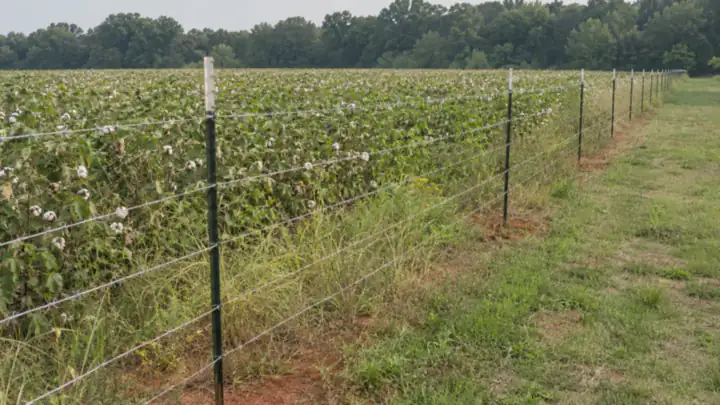
Limestone County is still one of Alabama's top cotton counties, and much of the open land around Athens is cropland, hay ground and pasture. As subdivisions spread onto former farmland, more fence lines now separate livestock from new backyards, and a sagging wire fence next to a neighborhood is a problem nobody wants. Solid perimeter fence and well-hung gates keep animals where they belong.
The red clay that grips posts in town does the same out in the pasture, but it turns slick in wet months and creek bottoms stay soft. H-braces at every corner, end and gate carry a wire fence's tension, and soft ground makes them more important, not less. Between braces, T-posts do most of the work, with a treated wood post dropped in every so often, spaced for the animals you keep.
Farm and ranch fence options
Barbed wire
Four or five strands stretched on T-posts between wood H-braces, the usual way to hold cattle.
Woven wire
Field fence for goats, sheep, hogs and dogs that slip through barbed wire, often with one strand of barbed wire on top.
Horse fence
Horse-safe fencing with no barbs: no-climb mesh or wood board, both easy for a horse to see.
Cross fencing
Inside fences that divide a pasture into paddocks for rotational grazing or keep animals apart.
Farm gates
Tube steel and pipe gates on braced posts, wide enough for tractors and hay equipment.
What drives farm fence cost
- Overall footage, plus how many corners, braces and gates it takes.
- Barbed wire versus woven or no-climb wire, which cost more.
- Clearing brush, overgrown fence rows and old wire along the line.
- Ground conditions: creek crossings, soggy bottoms and hillsides.
- Post choice: T-posts, treated wood or pipe.
Farm & Ranch Fence questions
How far apart should T-posts go on a cattle fence?
Plan on roughly 10 to 15 feet between T-posts for barbed wire holding cattle, and tighten that up in soft bottoms or along a lane where cattle push. Woven wire needs closer posts to stay tight. The fence still depends on its H-braces, so those get built first.
Can an old fence row that's grown up in trees be rebuilt?
Yes. Old wire, rotten posts and the brush and saplings grown into the line can be cleared and the fence rebuilt, usually on the same path. Clearing adds cost, so walking the line with the crew before pricing helps.
More fence services
Areas we serve
Farm & Ranch Fence in Athens: get your free quote
Give us the acreage, the animals and a rough idea of the fence line, and a local contractor will walk it with you and put together a price.